Patient Guide: Surgical Oncology
Peritoneal cancer, sarcoma, HIPEC and recovery, explained without jargon.
For Patients
Understanding your diagnosis and treatment options is the first step. We are here to guide you through every stage.
What to Expect
Review of history, imaging, and pathology.
Tumour board with medical oncology, radiology, and pathology.
A personalised plan with options, risks, and expected outcomes.
Preparation, surgery, and enhanced-recovery protocols.
Structured surveillance and support after treatment.
Start from your diagnosis
Each page explains the disease in the patient's language, with published results and their sources, and ends by saying when a second opinion is worth seeking.
Peritoneum
Sarcoma
Before deciding
New · A book for patients
Peritoneal carcinomatosis and peritoneal metastases: why one patient is offered surgery and another is not
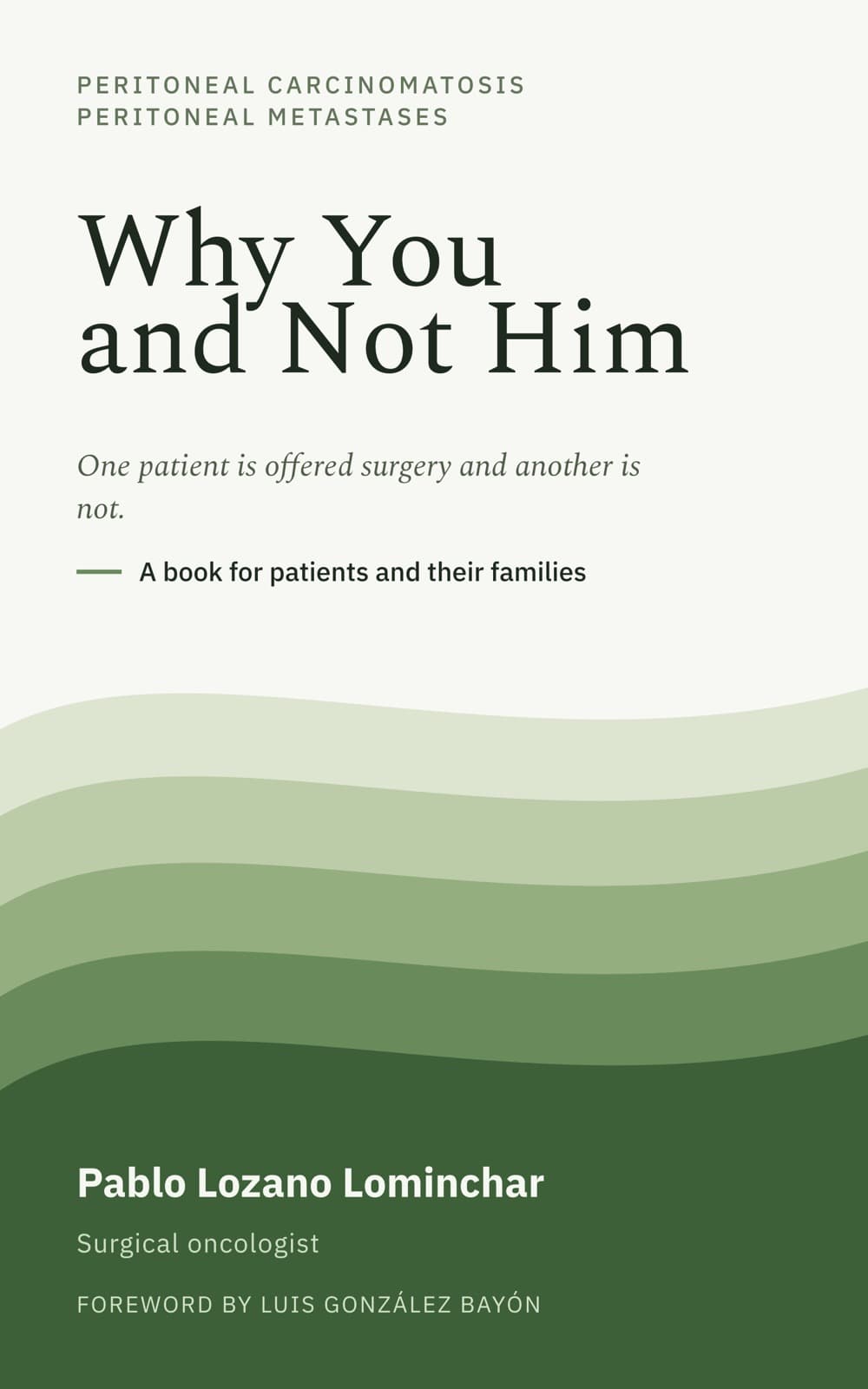
You have been told you have peritoneal carcinomatosis. You searched online and found figures you could not place, from studies with no date on them. This book sorts them out.
In 2003, a patient with peritoneal metastases from colorectal cancer lived a median of twelve months. In 2021, the operable patients in the PRODIGE 7 trial were past forty. None of that existed when the person treating you began training.
Written without compassion and without euphemism, for an adult reader who does not know medicine but does know how to read. Every figure comes from a published study and carries its full citation at the back, so you can check it or take it to your doctor.
This is not medical advice and does not replace your team. It exists to make the conversation with your doctor better.
Patient Guides
Free EPUB downloads, in Spanish and English.
Peritoneal cancer, sarcoma, HIPEC and recovery, explained without jargon.
What the PCI score measures, what cytoreduction involves and what to expect from HIPEC.
Diagnosis, staging, what an R0 resection means and how follow-up works.
What hyperthermic intraperitoneal chemotherapy is and what it means for recovery.
The institute's patient guide.
Frequently Asked Questions
Cytoreductive surgery (CRS) removes all visible tumour from the abdomen, followed by hyperthermic intraperitoneal chemotherapy (HIPEC): heated chemotherapy that bathes the cavity to destroy microscopic disease.
It depends on the origin and extent of disease, your general condition, and whether a complete cytoreduction is achievable. Evaluation includes imaging and sometimes a diagnostic laparoscopy.
Hospital stay is usually 10–14 days, with full recovery over 2–3 months. We use enhanced-recovery (ERAS) protocols.
Yes. Second opinions are welcome; sending your records and imaging ahead of time allows review before the visit.
Yes. Travel logistics and follow-up are coordinated with your local physician. Online consultations are available.
Imaging (CT, MRI, or PET), pathology reports, previous operative notes, and a medication list. Digital copies are fine.
We welcome international patients. Online consultations available.